Visa Integrity Risk Program Fees: What to Ask Your Processor
By Robert Oswald, CEO of FindAProcessor.co - Published - Updated
Last reviewed: 21 October 2026. Fee mechanics below come from Visa's public rules and program documents. Amounts don't - Visa's fee schedule is member-only, and we won't invent numbers for it.
Key takeaways
- Visa Integrity Risk Program fees are assessed on the acquiring side. You only pay them if your processor passes them through, and the pass-through terms live in your contract, not on Visa's website.
- There is no reliable public dollar or percentage figure. Visa's fee schedule is restricted. Any exact VIRP number you find online, including on processor marketing pages, is unverified.
- The program works in three MCC tiers, from adult content and dating in Tier 1 to financial trading and negative-option billing in Tier 3.
- A processor's Fall 2026 card-brand notice already names the charges: High Integrity Risk Transaction Fees and High Integrity Risk Volume Fees, effective October 2026 for card-not-present transactions in five Latin America & Caribbean MCCs.
- Ask for three things: the fee name verbatim, the base it's charged on, and the contract clause that authorizes it. If the answer is "it's built into your rate," that's not an answer.
What the Visa Integrity Risk Program is, in plain terms
VIRP is a registration regime, not a pricing tier. Visa uses it to track and police merchants whose business model carries elevated regulatory, reputational or fraud risk - and it puts the work on your acquirer rather than on you directly.
The Core Rules (18 April 2026 edition), Section 1.9.5.1, High-Integrity Risk Acquirer Requirements, sets out what your processor has to do before your first transaction settles:
- Obtain High-Integrity Risk Acquiring Registration approval before submitting transactions
- Pass Visa's financial review and meet applicable capital or compensating-control conditions
- Complete due diligence against the Visa Acceptance Risk Standards, including an on-site VARS review where required
- Register the merchant - and any payment facilitator, sponsored merchant, ramp provider or conversion affiliate in the chain - in Visa's Program Request Management (PRM) application
- Monitor your account daily against a first-month baseline, and answer VIRP information requests within seven business days
Visa can also assess acquirers monthly for registration failures and restrict their high-integrity-risk acquiring. That last point matters to your bill: registration and monitoring are real operational costs your processor carries on your behalf, which is one honest reason a VIRP line appears at all. Whether it appears at cost is a separate question.
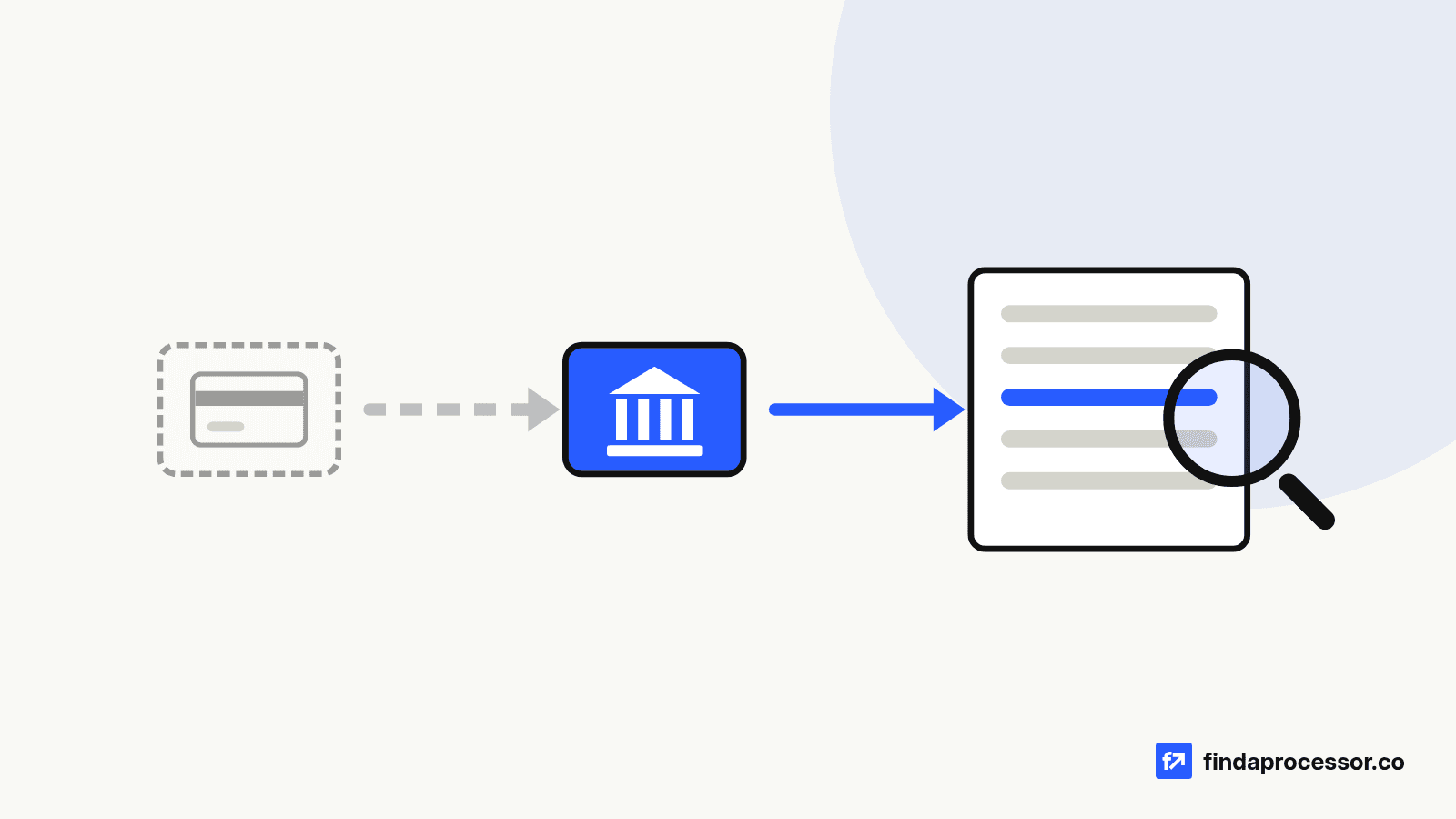
The key structural fact: Visa bills the acquirer. You don't get a Visa invoice for this. Everything you see on your statement is your processor's decision about how to pass it down.
Which MCCs VIRP covers, by tier
Visa's public program guide groups high-integrity-risk MCCs into three tiers. The public copy we could reach is dated April 6, 2023, and its groupings line up with the MCC conditions in the October 2026 Merchant Data Standards Manual.
| Tier | MCCs | Categories | What the tier demands |
|---|---|---|---|
| Tier 1 | 5967, 7273, 7995, 5122, 5912 | Adult content, dating, gambling, drugs/pharmacies | Separate Visa approval per category; initial control assessment plus annual self-assessment |
| Tier 2 | 6051, 6012, 4816, 5816 | Non-fiat/crypto, cyberlockers, games of skill | Control assessment plus annual self-assessment |
| Tier 3 | 6211, 5966, 5968, 5993 | Financial trading, outbound telemarketing, negative-option billing, cross-border tobacco | Registration and ongoing monitoring; control self-assessment on Visa's request |
Two mechanics from the October 2026 MDSS decide whether your transactions actually carry the high-integrity-risk treatment - and therefore whether the transaction fee applies to you:
- For 5122, 5912, 5966, 5967, 5993, 7273 and 7995, the code is high-integrity-risk for all card-absent transactions.
- For 4816, 5816, 6211 and 5968, only specific card-absent transaction types qualify.
- For 6012 and 6051, only specified financial or crypto activity counts, and crypto requires Special Condition Code 7.
- If you run several lines of business at one location, the MDSS expects separate MCCs, with the high-risk code applied only to the qualifying line.
That last rule has a fee consequence that's easy to miss: it can determine which of your transactions carry the high-integrity-risk treatment, and therefore which ones a per-transaction or volume fee applies to. If you're not certain which code you're boarded under, settle that first - the high-risk MCC codes guide covers each code without the fee angle. Dating operators should check the dating merchant account page for how 7273 is underwritten, and adult programs should check adult payment processing.
The fees that can show up on your statement
Everything in this section is reported, not confirmed. We can describe the shape of each charge. We can't give you the amount, because Visa doesn't publish it and the figures circulating online contradict each other. Get yours itemized in writing.
1. The VIRP registration fee
Visa's program guide and Acceptance Risk Standards require the acquirer to pay a designated one-time, non-refundable application fee, set by tier, when it applies for High Integrity Risk Acquirer Registration. That's the acquirer's cost; neither public document states the amount or says it is charged per merchant. If a "registration fee" appears on your statement, it's your processor's charge, and you need its basis in writing.
What to pin down: is it one-time or does it recur annually? Per legal entity, per MID, or per website? Refundable if Visa rejects the registration? Does it get re-charged when you add a new domain or acquire another brand?
2. The Visa high integrity risk transaction fee
A per-transaction charge. It appears under this name in a processor's Fall 2026 card-brand notice, so it's the wording to search for on your statement and in your contract.
What to pin down: is it charged per authorization or per settled transaction? On approvals only, or on declines and attempts too? Card-absent only, or every transaction under the MCC? Does it apply to refunds and credits, and does it survive a chargeback? A fee charged on attempts rather than settlements can behave very differently from what you modelled.
3. Volume-based fees
A percentage-of-volume charge, reported in the same Fall 2026 notice as a High Integrity Risk Volume Fee sitting alongside the transaction fee. This is the one that scales with growth, so it's the one worth negotiating hardest at renewal.
What to pin down: the base - gross or net of refunds, settled or attempted volume, domestic only or cross-border? Is there a monthly minimum or floor that applies even in a slow month? Does it stack on top of the transaction fee or replace part of it?
4. How pass-through actually works
There are three ways a brand-level assessment reaches you, and only one of them is checkable:
- Itemized separately - its own statement line. You can reconcile it against volume.
- Bundled - rolled into "brand fees," "miscellaneous" or "regulatory pass-through." You can't verify it.
- Absorbed - no line at all, priced into your all-in rate during underwriting.
Even the first version deserves a question: is the rate you pay the same figure the acquirer is assessed, or does it carry an admin uplift? Ask whether your agreement gives you the right to see the brand notice the charge is based on. A processor passing fees through at cost should be able to produce that document.
For context on where this sits: high-risk card pricing commonly lands around 3-4.5% all-in. A VIRP pass-through sits inside or on top of that band depending on how your deal is structured - which is exactly why you need the line itemized rather than guessed at.
5. How to budget around Visa high risk merchant fees 2026
Split the budget in two. On one side, what you can control: processor margin, gateway, reserve terms. On the other, variable brand-level charges, where you can only establish the base and the cadence. Build Visa high risk merchant fees 2026 into the second column, ask each processor for its VIRP lines in writing, and reject any quote that only gives you an all-in percentage with no line-item breakdown.
VIRP vs Mastercard's specialty merchant fees
Both programs do similar things with different machinery. Merchants on dual-brand checkouts can see both.
| Visa VIRP | Mastercard specialty merchant program | |
|---|---|---|
| Who's swept in | MCC-tiered, with transaction-type conditions in the MDSS | Merchant-category-based registration |
| Registration vehicle | High-Integrity Risk Acquiring Registration, filed by the acquirer via PRM | Registration plus periodic renewal, filed by the acquirer |
| Reported fee shapes | One-time application fee; per-transaction fee; volume fee | Registration/renewal fee; per-transaction fee; volume fee |
| Public fee detail | Member-only schedule | Annual registration fee of USD 1,000 per merchant from May 1, 2026 (bulletin 12568.1); other amounts not public |
| Where you'll see it | Statement line, if passed through | Statement line, if passed through |
The practical difference for a merchant is timing: Mastercard's program has a renewal clock you can plan around, while Visa's VIRP costs move with tier assignment and MCC conditions. We broke the Mastercard side down separately in Mastercard specialty merchant fees: what to ask.
Why the numbers you find online don't match
If you've already searched for a figure, you've noticed the conflict. Four reasons:
- Visa doesn't publish it. The Core Rules are public; the fee schedule isn't. Everyone quoting a number is quoting a processor's price sheet or an older schedule version, not Visa's rate.
- Pass-throughs get repackaged. Two processors assessed identically can present the same charge as a flat fee, a per-transaction line, or nothing at all with a higher discount rate. Same cost, three different statements.
- Regional editions drift. One processor's Fall 2026 card-brand notice lists High Integrity Risk Transaction and Volume Fees for Latin America & Caribbean MCCs 5967, 7273, 7995, 6012 and 6051, effective October 2026 - and its English and Spanish versions reportedly disagree on the fixed fee. Same notice, same effective date, two numbers. If a processor can't keep its own two language versions aligned, don't treat its verbal quote as final.
- Programs overlap. VIRP sits next to other October 2026 brand changes, including the Visa Compelling Evidence 3.0 update. Lumping them into one "Visa fee" figure produces averages that describe nobody.
The itemization checklist to send your processor
Copy this into an email. Ask for written replies - a call is not documentation.
| What to ask | What a good answer looks like | Red flag |
|---|---|---|
| What is this line item called, exactly? | "Visa High Integrity Risk Transaction Fee, per the Fall 2026 brand notice" - with the notice page attached | "Misc fees," "brand assessment," or no name at all |
| Is the registration fee one-time or recurring? | A written cadence: one-time at registration, or annual on renewal, per entity | "We'll confirm after approval" |
| What's the per-transaction base? | Per settled card-absent transaction, defined, with a worked example on your volume | "It's included in your rate" |
| What's the volume fee charged on? | Net settled volume, refunds excluded, base stated in the fee schedule | "It varies by month" with no formula |
| Is this passed through at cost, or marked up? | At cost, with a right to see the underlying notice | "Standard market markup" |
| When does it take effect, and what notice do I get? | Matches the brand effective date; defined notice period before a change | Retroactive application |
| Which contract clause authorizes it? | A schedule or section reference you can read | Verbal assurance only |
| Who absorbs the next increase? | Stated: your rate adjusts, with a cap or a renegotiation trigger | Silent, unilateral adjustment |
If a processor won't fill that in, that's data too. The questions to ask a high-risk processor page has the wider set for underwriting conversations.
If a new line item already appeared on your statement
Don't absorb it. Work in this order:
- Pull three months of statements. Establish when the line first appeared and whether it moved with volume. If it tracks transactions rather than settlements, it's a per-item charge and you should be able to forecast it.
- Get the descriptor verbatim, then search your contract for that string. If it isn't there, the pass-through clause is doing the work - find it and read the change-notice terms.
- Request the brand notice page that authorizes the charge, plus the effective date. This is a reasonable request; a processor passing through at cost already has the document.
- Ask for the calculation on one month, showing volume, base and rate. Reconciling a single month catches double-charging and charges on declined attempts faster than anything else.
- Don't let it come out of reserve. A brand fee netted against a rolling reserve reduces the buffer you need for chargebacks and makes the charge harder to see.
- Escalate in writing if it's retroactive or duplicated. Ask for the reversal and a revised statement on a stated timeline. If money is being held while you argue, the what to do when a processor freezes your account walkthrough covers the sequencing.
- Price it into your next renewal. A per-transaction brand fee changes your effective rate, which changes your break-even. Run the comparison against competing offers before you re-sign - the offer comparison framework normalizes fee structures so a pass-through can't hide in a headline rate.
Visa bills the acquirer, not you
Here's the part worth internalizing: Visa doesn't invoice merchants for VIRP. Registration, monitoring and the associated assessments run through the acquirer. So the line item on your statement isn't a Visa charge to you - it's your processor's pass-through of a cost it's carrying, at cost or otherwise.
That reframing hands you leverage. You're not disputing Visa's rate; you're asking a vendor to justify its pricing. Ask for the notice, ask for the calculation, and ask what the pass-through clause says about the next increase.
We match merchants in supplements, dating, adult, CBD, crypto, travel, telemedicine and adjacent high-risk verticals with processors whose underwriting actually fits the model, geography and checkout - and we read the fee schedules before recommending anyone. We can't promise approval, and nobody can. But we can make sure you know exactly what you're paying for by the time you sign.
Start with the industries we cover or tell us about your business. The service is free to merchants because the processors pay us.
FAQ
Is this legal advice? No. This is a merchant-side explainer on how payment fees get presented on a statement. For contract interpretation, regulatory exposure or disputes, use a lawyer or your acquirer's compliance contact.
Do I have to pay VIRP fees myself? Only if your processing agreement says so. Visa assesses the acquirer; the acquirer decides how much to pass down and under what clause. Read the fee schedule and the pass-through or fee-change section before you sign anything.
How much is the VIRP registration fee? There is no verified public figure. Visa's fee schedule is restricted, and every specific number circulating online traces back to a processor's price sheet or an older schedule version - which is why they disagree. Ask your processor to put the amount, cadence and basis in writing.
Why is my Visa high integrity risk transaction fee different from another merchant's? Different tier, different MCC conditions under the MDSS, different region, different volume band, and a different pass-through markup. Two merchants with identical volume can pay different amounts for the same underlying assessment.
Can my processor add these fees mid-contract? Often yes, if the agreement includes a brand-fee pass-through or a fee-change clause. The questions that matter are how much notice you get, whether changes apply retroactively, and whether there's any cap.
Does registering under VIRP improve my approval odds elsewhere? A completed registration confirms the acquirer has done the required due diligence on your account. It doesn't transfer between processors and it doesn't obligate a new one to board you.
Is VIRP the same as Mastercard's specialty merchant program? No - separate programs, separate registration vehicles, separate fee lines. Dual-brand merchants can be registered in both, so budget for both.
What if my processor won't itemize? Treat it as a pricing signal. A processor passing a brand charge through at cost should be able to produce the underlying notice. If yours can't or won't, price the offer as if the fee is marked up.
Sources
- Visa Core Rules and Visa Product and Service Rules - 18 April 2026 edition, Section 1.9.5.1, High-Integrity Risk Acquirer Requirements
- Visa Merchant Data Standards Manual - October 2026, high-integrity-risk MCC conditions and transaction-type requirements
- Visa Acceptance Risk Standards - application materials and the designated one-time application fee
- Visa Integrity Risk Program guide - April 6, 2023 edition, tier groupings and registration requirements
About Robert Oswald: Robert has worked in online payments for over 20 years, with companies like Braintree, Worldpay, Recurly, and PayPal. He has worked with companies such as Instacart, Everlane, Live Nation, Grubhub, AMC, Twitch, and Lululemon.