Federal hemp definition change: what the Nov 12 and Dec 11, 2026 dates mean for CBD and hemp merchant accounts
By Robert Oswald, CEO of FindAProcessor.co - Published - Updated
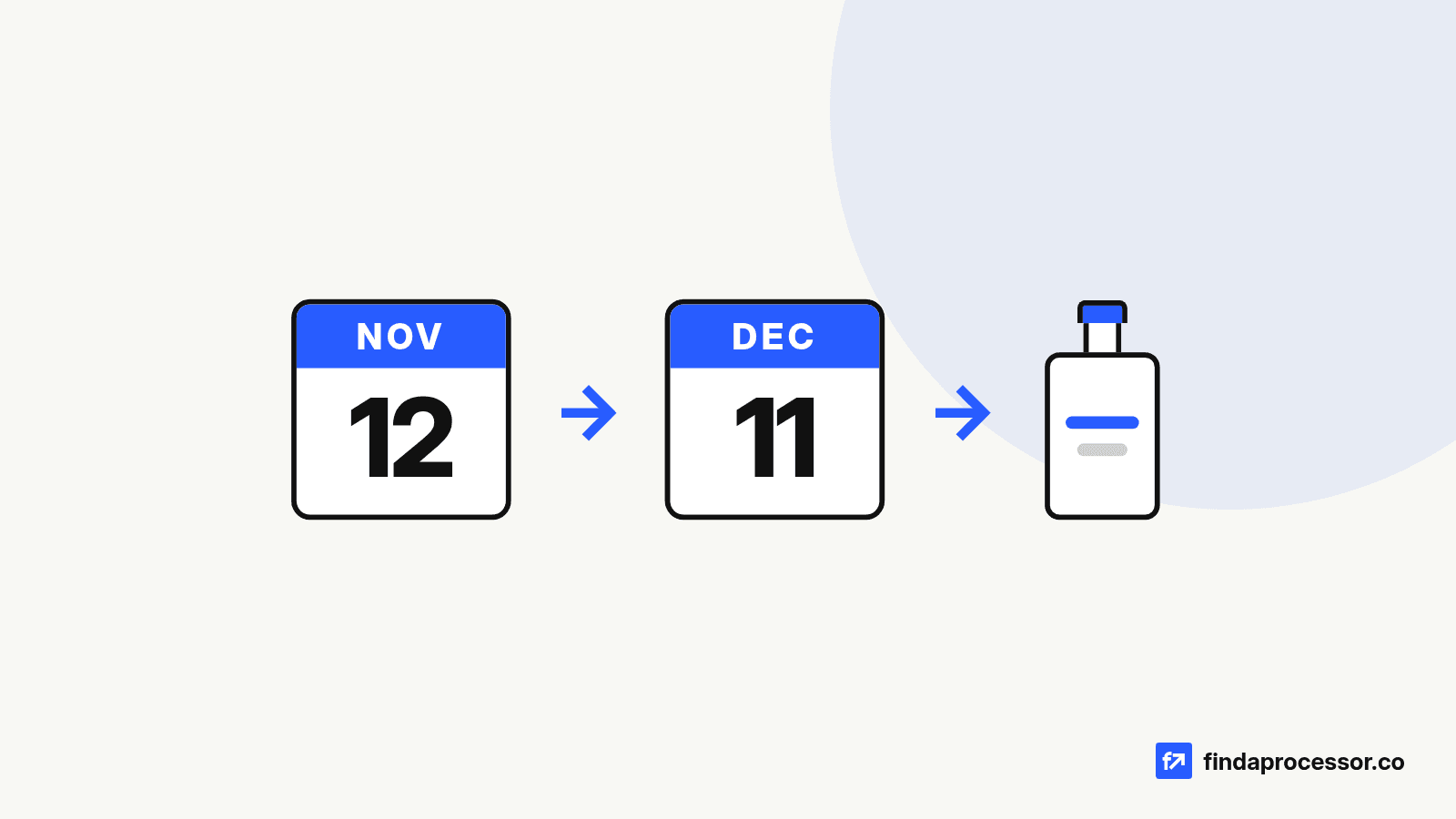
Two federal dates land on hemp merchants this quarter, and they don't do the same thing.
November 12, 2026 switches on one narrow slice of the new federal hemp definition: intermediate and finished products built on cannabinoids the cannabis plant can't naturally produce drop out of "hemp." December 11, 2026 brings the rest - total THC instead of delta-9, plus the 0.4 mg per-container cap.
If your processor is about to re-underwrite your catalog, treat this as the federal hemp definition change 2026 merchant account briefing: what each date changes, what underwriters will ask for, and what to have on the table before they ask.
None of it is legal advice. We're payments people, not your lawyer, and the SKUs you keep or kill are a call for you and counsel.
The short answer: two dates, two different changes
| November 12, 2026 | December 11, 2026 | |
|---|---|---|
| What goes live | The exclusions for intermediate and final products containing cannabinoids not capable of being naturally produced by the plant | Everything else: total THC ≤0.3% dry weight, the 0.4 mg per-container cap, viable-seed and intermediate-product limits |
| Where it comes from | P.L. 119-37, Division B §781, narrowed by P.L. 119-103 §2019 | P.L. 119-37 §781, deferred to this date by P.L. 119-103 §2019 |
| SKUs most exposed | Lab-made cannabinoids sold as "hemp derived" - THC-O acetate is the usual example | Lab-converted delta-8, THCA-heavy flower and concentrates, high-count gummy packs, beverages, anything where the per-package THC math runs hot |
| What to do first | Pull every SKU you can't document as plant-produced | Rebuild your SKU list around total THC per innermost retail container |
- The 2018 Farm Bill test - delta-9 THC at 0.3% of dry weight - is not the test after December 11, 2026. Total THC, including THCA, is.
- Once a product falls outside the definition, the Congressional Research Service says it's treated as marijuana under the Controlled Substances Act, not hemp.
- Processors don't have to wait for either date. A re-underwriting decision is a business call, and it can run months ahead of a statute.
What the new hemp definition changes versus the 2018 Farm Bill
The 2018 Farm Bill asked one question: how much delta-9 THC is in the dry weight? P.L. 119-37 replaces that with a stricter question, and then bolts exclusions on top of it.
From delta-9 to total THC
After December 11, 2026, the plant-material standard reads no more than 0.3% total THC on a dry weight basis, with THCA counted in the total rather than measured separately. That single word - total - is what moves most of the catalog.
The exclusions, per CRS
CRS lays out the excluded categories this way:
- Viable seeds that test above 0.3% total THC.
- Products containing cannabinoids that the plant is not capable of naturally producing.
- Products with naturally occurring cannabinoids that were synthesized or manufactured outside the plant.
- Intermediate products above 0.3% combined total THC and similar cannabinoids.
- Final products with more than 0.4 mg combined total THC and similar cannabinoids per container (the innermost retail packaging).
Everything in that list is treated as marijuana, not hemp, once it applies to your product.
Why THCA-heavy flower and "hemp-derived" synthetics are the SKUs that move
Flower is the obvious casualty. Open a typical flower COA and you'll see delta-9 and THCA on separate lines, one above the other. A lot of biomass that reads comfortably under 0.3% delta-9 carries several points of THCA on the same page. Count total THC and the same lot doesn't clear 0.3% anymore.
The lab-made side is a different argument with the same result, and a later clock. Delta-8 gummies made by converting CBD in a facility start from a molecule the plant does produce - so the November 12, 2026 slice does not reach them; that date covers only cannabinoids the plant cannot naturally produce. The exclusion for naturally occurring cannabinoids that were synthesized or manufactured outside the plant belongs to the December 11, 2026 batch, and it arrives alongside the total-THC standard and the 0.4 mg cap. From that date a delta-8 merchant account 2026 application gets read against a total-THC number and an origin question, and underwriters are not splitting that hair in your favor while the FDA lists are unsettled.
If you sell CBD isolate, broad-spectrum tinctures or topicals that genuinely test near zero total THC, you're in the calm part of the market. Our guide to CBD merchant accounts covers how that underwriting actually runs.
Why there are two dates: November 12 and December 11, 2026
The original clock: P.L. 119-37
The FY2026 Agriculture appropriations act, enacted November 12, 2025 as P.L. 119-37, amended the hemp definition at 7 U.S.C. §1639o in Division B §781. It gave the industry 365 days, which put the effective date at November 12, 2026.
The split: P.L. 119-103 §2019
Then came the Continuing Appropriations and Extensions Act, 2027 - P.L. 119-103, enacted September 2, 2026. Its §2019 says that, until December 11, 2026, the §781 amendments "shall only apply" to products described in paragraphs (1)(C)(ii)(I) and (1)(C)(iv)(I). Those are the intermediate-product and final-product exclusions for cannabinoids that can't be naturally produced by the plant.
Plain version:
- On November 12, 2026, the not-naturally-produced exclusion is live. Everything else waits.
- On December 11, 2026, the total-THC standard, the 0.4 mg cap and the remaining exclusions all come on at once.
- December 11, 2026 is also the day the stopgap funding law runs out. That's not a coincidence; the hemp date rides the next funding vehicle, which is exactly how Congress moved it the first time.
That overlap is why you'll see headlines and search terms like hemp THC ban December 11 payment processing. Most of what sits behind that phrase describes a processor's risk appetite or a platform's notice, not the statute. Two clocks are running, and they keep very different time.
What underwriters will ask for before they re-review your account
Nobody can promise you an approval - not us, not a sales rep with a rate sheet. What you can control is whether the file is answerable in one pass.
A SKU list mapped to the post-December-11 definition
Not a product page export. A spreadsheet with one row per sellable unit and a column for cannabinoid, mg per unit, units per container, total mg per container, and the COA date behind the number. Underwriters re-read your catalog against the new definition, and they'll ask which rows you're keeping, which move to a different processor, and which you're pulling.
COAs that report total THC, not just delta-9
"Delta-9: 0.21%" on a lab report isn't a total-THC figure. Ask your lab or supplier for a report that sums delta-9 and THCA (many labs print a "total THC" line; some only print the pieces). Batch-level, dated, matching the lot you actually ship. If a supplier can't produce one, that's your answer about that SKU.
The 0.4 mg THC per container merchant account question: which container?
The cap applies to the innermost retail packaging, which means your unit of sale decides the number - and the number is combined total THC and similar cannabinoids, not the milligram figure printed on the front of the label.
Sell a 10-pack of gummies as one retail unit where each gummy carries 0.5 mg total THC: the container is the 10-pack, so 5 mg total THC sits well over the 0.4 mg cap. Sell a single gummy carrying 0.05 mg total THC on its own, and each gummy is a container at 0.05 mg, which clears it. Sell a 12 oz beverage as a bottle and the bottle is the container. Bundle two bottles in shrink wrap for retail and you've got a different answer again. Do that math SKU by SKU before someone at the processor's desk does it for you.
One thing that trips people up: the big milligram number on a gummy label is usually CBD, and CBD milligrams are not the 0.4 mg test. What counts is combined total THC and similar cannabinoids per container, so a 5 mg CBD gummy testing near zero total THC is a different case from a gummy carrying 5 mg total THC - only the COA tells you which one you have.
Which SKUs you're discontinuing - in writing
Underwriters like a plan they can read in thirty seconds. One page: SKU, why it's going, last ship date, whether it's removed from the site and checkout or relabeled. A merchant who shows up having already retired the products that fail the new test looks like a business that read the law. A merchant who shows up with a catalog full of "we're waiting to see" looks like a liability.
Two more things they'll check
Your website is an underwriting document. If a product page still claims "100% federally legal hemp" and the COA tells a different story, you've created the exact mismatch that stalls a file. And the FDA was directed under P.L. 119-37 to publish lists of naturally occurring cannabinoids and THC-class cannabinoids; as of late September 2026 CRS noted those lists might still be pending. We won't tell you they're out or not - check FDA announcements directly, and confirm how a specific molecule is scoped with counsel.
The high-risk merchant account documents checklist covers the rest of the packet, and our industry pages show what your vertical typically gets asked for beyond the standard file.
Practical prep checklist
This week, before November 12, 2026
- Export your full SKU list and add cannabinoid, mg per unit and units per container columns. Two hours of spreadsheet work beats a week of email.
- Flag every product you can't document as plant-produced. THC-O acetate is the standard example; anything a supplier describes as "converted," "semi-synthetic" or "engineered" belongs in the same pile.
- Ask suppliers for current COAs showing total THC per container. Ask today - lab turnaround is the bottleneck, not the paperwork.
- Stop reordering inventory you may discontinue. Dead stock is cheaper than a declined application.
- Chain of custody matters here: keep supplier invoices for anything in that pile.
- Get a written read from counsel on the marginal SKUs. "Probably fine" is not a category underwriters accept.
Before December 11, 2026
- Rebuild the SKU list against the total-THC standard, with the per-container math done for the packaging you actually sell.
- Replace any COA that reports delta-9 only. Batch-level and recent.
- Write the discontinuation page described above, then remove those SKUs from the site, catalog and checkout.
- Check labels and packaging claims. "0.0% THC" on a bottle that carries 3 mg total THC is a chargeback magnet and a compliance problem in one.
- Map the states you ship to. Federal timing doesn't suspend state law, and some states are already stricter than the coming federal floor.
- Line up your application materials now, and run the questions to ask a high-risk processor list in the same week you assemble the packet. You want a comparable offer, not a vague "send it over."
This is not the same as the mainstream-processor exit
Worth separating cleanly, because the two get blended in every thread about this.
The federal definition change is a statute. The mainstream exit is a commercial decision. Square reportedly told sellers to remove CBD, hemp and hemp-derived items from their catalogs by October 15, 2026, and trade press reported November 5, 2026 account closures for hemp-dominant sellers. Those are reported notices, not federal law - no statute says Square has to leave the category, and no statute will bring it back if the December date moves. We walk through the notices, the dates and the migration sequence on our Square CBD and hemp deadlines page.
The practical consequence: CBD payment processing after the hemp ban is a smaller market than the one most merchants signed up for. Fewer banks, longer reviews, more document requests. If your account has already been closed or your application has already been declined, the playbook for a decline or shutdown is the honest starting point, and it's better read before you fire off five applications.
FAQ
Is the federal hemp definition change in effect now? Not yet. As of today, none of the P.L. 119-37 amendments have taken effect; the first piece lands on November 12, 2026 and the rest on December 11, 2026. State law is a separate question and may already be stricter where you sell.
What happens on November 12, 2026 versus December 11, 2026? November 12 activates the exclusions for products containing cannabinoids that can't be naturally produced by the plant, including the intermediate-product version. December 11 brings the total-THC standard, the 0.4 mg per-container cap and the other exclusions.
Do my COAs need to show total THC? For a post-December-11 catalog, yes - a delta-9-only report doesn't answer the question being asked. Ask your lab for a report that totals delta-9 and THCA, batch-level, dated.
How is "container" defined for the 0.4 mg cap? The innermost retail packaging. A multipack sold as one unit is the container, not the individual item inside it - which is why the same gummy can pass or fail depending on how you sell it.
What about delta-8 and THCA products? They're the SKUs that move most. THCA-heavy flower usually clears a delta-9 test and fails a total-THC one. Lab-converted delta-8 raises the "synthesized or manufactured outside the plant" question, and that question arrives with the December 11, 2026 batch rather than the November 12, 2026 one - that's a call for counsel, not for a payments blog.
Could the dates move again? Another extension is possible - December 11, 2026 is also the funding deadline, and that's where this change has been parked before. Don't plan around it. Underwriters are already pricing the post-December world, and a merchant who bet on a third delay would be applying with a catalog nobody wants to board.
Will my processor wait until December 11, 2026 to act? Not necessarily. Re-underwriting is a business decision on the processor's own timeline, and Square's notices went out roughly four months before either federal date. Assume the review can start whenever the risk team decides it starts.
Is this legal advice? No. This is general information about how payment processors are reading a statute. It isn't legal, tax or compliance advice, and it creates no professional relationship. Talk to a licensed attorney about your products, your labels and your state exposure.
Get matched before your processor re-underwrites
We read files like yours every week: a catalog with three tiers of risk in it, a COA folder that's half delta-9-only, and a processor asking for an answer by Friday. Our job is to sort the catalog against the definition, tell you which SKUs are actually placeable, and match you with processors whose underwriting fits your products, your geography and your checkout - then walk the application, the pricing, the reserve and the contract terms with you.
It's free to merchants, because processors pay us. Start at findaprocessor.co.
Sources
- P.L. 119-37 (H.R. 5371), 119th Congress - Division B §781, the amendment to 7 U.S.C. §1639o, enacted November 12, 2025
- Public Law 119-37 full text (govinfo)
- P.L. 119-103 (H.R. 6500), 119th Congress - Continuing Appropriations and Extensions Act, 2027, §2019 and the December 11, 2026 split
- Public Law 119-103 full text (govinfo)
- CRS In Focus IF13136 - what the redefinition changes, including the exclusion list
- CRS Insight IN12620 - the hemp definition amendment in context
- CRS Legal Sidebar LSB11496 - the deferred effective dates and what applies when
About Robert Oswald: Robert has worked in online payments for over 20 years, with companies like Braintree, Worldpay, Recurly, and PayPal. He has worked with companies such as Instacart, Everlane, Live Nation, Grubhub, AMC, Twitch, and Lululemon.