Backup Payment Processor for High-Risk Merchants: How to Build a Second MID That Actually Works
By Robert Oswald, CEO of FindAProcessor.co - Published - Updated
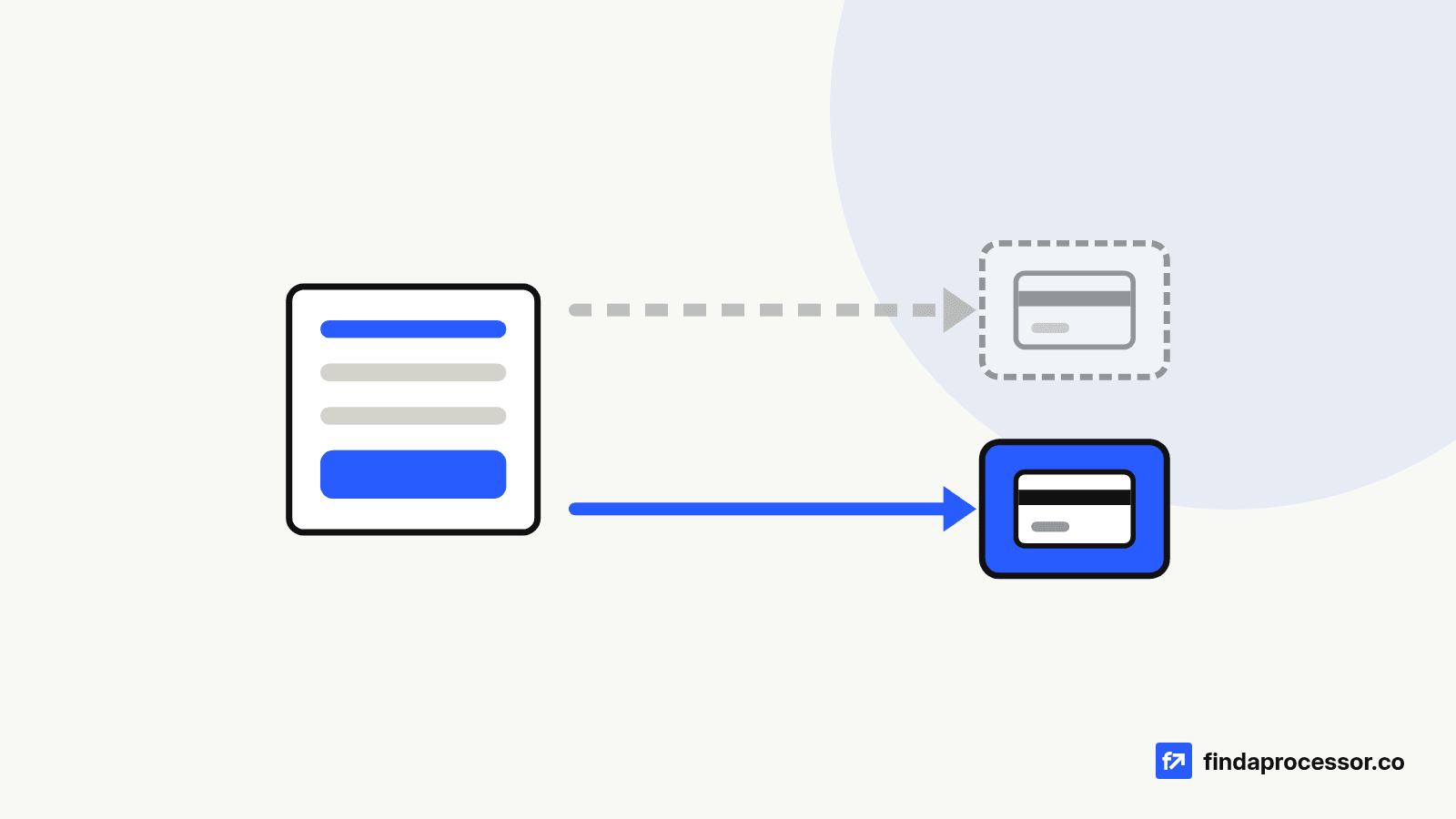
If your high-risk business runs every card transaction through one merchant account, one underwriting decision controls your entire revenue. A single MID is a single point of failure - and in high-risk verticals, that failure rarely arrives with warning. A spike in chargebacks, a change in your product mix, a new acquiring bank policy, or a routine annual review can put your account on hold while your checkout keeps taking orders you can't settle.
A second, failover MID is the standard answer. Done well, it means a bad week at one processor doesn't become a bad quarter for your business. Done badly, it means two accounts that both get flagged, a gateway that can't route between them, and reserves tied up on both sides. This guide covers the difference, in plain terms, for merchants who already process cards and are weighing a backup.
Why one MID is a single point of failure
A merchant account is not a utility. It's a contract with an acquiring bank, sponsored by a processor, underwritten against a specific business model, a specific set of product categories, a specific geography and a specific checkout flow. Every one of those variables is something the acquirer can re-examine later.
That creates concentrated risk in four places:
- Underwriting risk. Your account was approved on the file you submitted. If your volume profile, average ticket, refund rate or product line shifts meaningfully, the account can be re-reviewed - sometimes mid-month.
- Monitoring-program risk. Card-brand monitoring programs watch chargeback and fraud ratios by merchant. A single account absorbs all of that exposure at once, so one bad cohort of orders can push the whole account into a program.
- Operational risk. Holds, payout delays, gateway outages and settlement freezes happen. When you have one MID, each of those is a full revenue stop, not a partial one.
- Concentration risk. Your processor's appetite for your vertical can change for reasons that have nothing to do with you - a new acquiring bank relationship, a portfolio cleanup, a change in the sponsor's risk policy.
None of this means your current processor is doing anything wrong. It means your business is exposed to decisions made outside your control, and a backup MID is how you reduce that exposure.
When a backup makes sense - and when it doesn't
A backup MID is worth the effort for many established high-risk merchants, but not for everyone at every stage.
A backup usually makes sense when:
- You already process meaningful card volume and a processing stop would cost you real revenue, not just inconvenience.
- Your vertical carries elevated chargeback or fraud exposure - supplements, subscription dating, CBD, adult, crypto-adjacent, travel, telemedicine and similar categories.
- You have recurring billing. A failed rebill cycle is harder to recover than a failed one-off checkout, because you lose the customer relationship as well as the sale.
- You've already had a hold, a reserve request, a sudden rate change or a review that made you nervous.
- You sell into more than one geography or currency and could benefit from a second acquirer's regional appetite.
A backup doesn't have to be a card account: ACH/eCheck can serve as a non-card second rail.
A backup is usually premature or unnecessary when:
- You're pre-launch or processing very little. A second account adds underwriting work, statements to reconcile and reserves to fund before you have the volume to justify any of it.
- Your current account is already in a monitoring program and you haven't fixed the underlying chargeback or fraud problem. A second MID doesn't dilute a bad ratio - it duplicates it.
- You can't support the operational load. Two accounts mean two sets of statements, two settlement schedules, two reserve arrangements and two relationships to maintain.
- You're hoping a backup will let you route around a contract you've signed. It won't, and attempting it is a fast way to lose both accounts.
The honest test: if a processing stop tomorrow would be an annoyance, wait. If it would be an emergency, start building the backup now, while things are calm.
Disclosing the second account to both processors
This is the step merchants skip, and it's the one that causes the most damage.
Tell both processors about each other. Disclose the second MID in your application, in your onboarding questionnaire, and in any update you file when you add it. Underwriters ask about existing processing relationships for a reason: they are pricing and reserving against your total exposure, and an undisclosed account looks like an attempt to hide volume.
In practice, disclosure means:
- Naming your existing processor and MID in the new application, with realistic volume expectations for the new account.
- Telling your current processor that you're adding a backup, and how you intend to use it - standby, overflow, or split by product line.
- Keeping your business details consistent across both files: legal entity, DBA, website, descriptor, MCC, refund policy, contact details.
- Updating both sides if your model changes - new product categories, new geographies, new billing terms.
Undisclosed processing is one of the fastest routes to an account termination and a MATCH listing, which can make future underwriting much harder. Disclosure is not a red flag. Concealment is.
Failover vs. load balancing
These two words get used interchangeably, and they describe different things.
Failover means the backup sits idle until the primary fails - a hold, an outage, a decline rate spike, a settlement stop. You switch traffic when something breaks. The backup is insurance.
Load balancing means you split traffic across both accounts continuously - by volume percentage, by product line, by geography, by ticket size, or by transaction type. Both accounts are live all the time.
Load balancing keeps both accounts warm and gives you real data on how each processor performs, but it also means both accounts carry chargeback exposure and both may require reserves. Failover keeps your primary relationship clean and your reporting simple, but a backup that has never processed can be slow to activate under pressure.
A common setup is a hybrid: a small, steady share of live traffic on the backup so it stays active and proven, with the ability to shift the majority over quickly if the primary fails.
One constraint to know before you design the routing: Visa's Acquirer Monitoring Program (VAMP) monitors fraud and dispute levels at both the acquirer and the merchant level, and the public Visa Core Rules (Section 12.5.3.2) allow Visa to penalize changing or altering merchant data or performance to circumvent VAMP or the Visa Integrity Risk Program. Splitting volume to keep any account under a threshold falls on the wrong side of that line. That's a legal and contractual question, not a technical one - the multiple merchant accounts guide covers the detail, including how legitimate redundancy differs from threshold gaming.
Gateway and orchestration: making the switch real
A backup MID you can't route to is not a backup. Before you sign anything, confirm how traffic will actually move.
- Does your gateway support multiple MIDs? Many do, but the routing rules may be limited to simple volume splits or manual switching. Check whether you can switch in your own admin, or whether you need to open a support ticket during an outage - the second option is not a failover plan.
- Who controls the routing? If your processor owns the gateway, moving traffic to a different processor may not be possible at all. Ask directly.
- What triggers a switch? Define it in advance: a decline-rate threshold, a settlement delay, a support ticket that goes unanswered, a hold notice. Write it down so the decision isn't made in a panic.
- Can you test it? Run a small, deliberate volume through the backup on a schedule so you know the integration, the descriptor and the settlement reporting all work.
Orchestration layers can automate much of this, but they add a vendor and a fee, and they don't remove the need for disclosure. A router that quietly sends traffic to an undisclosed account is still an undisclosed account.
Token portability: the part that decides whether failover works
Card tokens are what make recurring billing and one-click checkout possible. They are also the most common reason a failover plan fails in practice.
Tokens are typically issued by a specific processor or gateway and are not automatically usable elsewhere. If your customer records live only as tokens inside Processor A, then when Processor A stops settling, you may have no usable card data to charge at Processor B - and re-collecting card details from your entire customer base is a conversion disaster.
Before you commit to a backup, establish:
- Where your tokens live and who owns them contractually.
- Whether they can be exported or ported to another processor or a card-brand tokenization service, and under what conditions.
- Whether a network-level token or a vault you control is an option for your volume and vertical.
- What your fallback is if tokens can't move - for example, a documented re-authorization flow for subscriptions.
Ask this question during underwriting, not during an outage. Portability terms belong in the contract conversation, alongside pricing and reserves.
Keeping the backup warm
An account that has never processed is an account with no history, no proven integration and no relationship. When you need it most, it will be the slowest thing you own.
Keeping a backup warm means:
- Running a small, consistent share of live volume through it, within whatever split you've disclosed to both processors.
- Testing the full path - checkout, authorization, capture, refund, chargeback response - not just a test transaction.
- Reconciling statements monthly so you notice fee changes, reserve changes or new conditions early.
- Maintaining the relationship with an actual contact at the backup processor, not just a support queue.
- Reviewing the plan on a schedule - quarterly is reasonable for most merchants - and after any change to your model.
A warm backup also gives you negotiating information. When you know what a second processor will do with your file, you're in a better position to compare offers and discuss pricing and terms with your primary.
Descriptor and MCC consistency
Your descriptor and merchant category code are how the card networks, issuers and your customers identify you. Inconsistency between two accounts creates avoidable problems.
- Keep the descriptor recognizable and consistent. Customers should see the same recognizable business name on their statement regardless of which MID processed the charge. A descriptor that changes between accounts drives "I don't recognize this charge" disputes, and those disputes count against you.
- Use the MCC that actually fits your business. Don't pick a code because it looks cheaper or less scrutinized. A mismatch between your MCC, your website content and your actual product mix is a classic underwriting red flag and can be treated as misrepresentation.
- Align the public-facing details. Website, refund policy, terms of service, support contact and billing descriptor should match across both files. If your high-risk MCC codes are unclear for your model, resolve that before you apply anywhere.
- Check how each processor reports you. Some acquirers add their own prefix or suffix to the descriptor. Confirm what the cardholder will actually see.
Reserves on both accounts
Reserves are the most underestimated cost of a second MID. High-risk accounts frequently carry a rolling reserve, and a second account usually means a second reserve.
Plan for it:
- Assume both accounts may require a reserve and budget the cash impact before you sign. A reserve on the backup is real money held back even if the backup processes very little.
- Understand the structure - percentage held, holding period, release schedule, and whether it's capped. The rolling reserves guide walks through the mechanics.
- Ask whether a reserve can be reduced or waived once you have processing history with that processor, and what the criteria are.
- Don't fund a reserve with money you need for inventory or ad spend. A reserve that strains operations defeats the purpose of redundancy.
- Review reserve terms at every renewal. They can change, and they're negotiable more often than merchants assume.
If two reserves are unaffordable right now, a smaller backup with a modest volume share is usually a better first step than a full second relationship you can't fund.
Setup checklist
- Define the failure scenarios you're protecting against - hold, freeze, outage, rate change, review, vertical appetite change - and what "switch" means for each.
- Confirm your current contract allows a second processing relationship, and note any exclusivity, minimum-volume or termination terms.
- Shortlist processors whose underwriting actually fits your vertical, geography and checkout - not just ones that advertise high-risk support.
- Disclose the new application fully, including your existing processor, MID and realistic volume expectations.
- Tell your current processor you're adding a backup and how you intend to use it.
- Verify gateway and orchestration capability - multi-MID routing, who controls it, how fast a switch happens, and whether you can test it.
- Resolve token portability before signing: where tokens live, whether they can move, and your fallback for subscriptions.
- Align descriptor, MCC, website and policy pages across both files.
- Model the reserve and fee impact of running two accounts, including a reserve on the backup.
- Set a warm-up plan - a disclosed volume share, a test schedule, monthly reconciliation and a named contact at each processor.
- Write the switch runbook - triggers, who decides, who executes, how customers are notified if anything fails.
- Schedule a quarterly review of both accounts, and revisit after any change to your model.
FAQ
Is a backup MID the same as load balancing? No. Failover keeps the backup idle until the primary fails; load balancing splits traffic continuously. Many merchants use a hybrid - a small live share on the backup with the ability to shift most traffic quickly.
Do I have to tell my current processor? Yes. Disclose the second account to both processors. Undisclosed processing risks termination and a MATCH listing, which makes future underwriting much harder.
Will a second account lower my chargeback ratio? Not by itself. Visa monitors fraud and disputes at the merchant level as well as the acquirer level, and its rules prohibit altering merchant data or performance to circumvent its monitoring programs. Fix the underlying chargeback problem first.
Can I move my stored card tokens to the new processor? Sometimes, and it depends on the contract and the tokenization setup. Confirm portability before you sign, and have a re-authorization plan for subscriptions if tokens can't move.
How much volume should I run through the backup? Enough to keep it active, tested and proven, within the split you've disclosed. The right number depends on your vertical, ticket size and reserve terms.
Will a second processor approve me? Underwriting is a business decision each processor makes on its own file. Nobody can promise approval - the goal is to apply where your model genuinely fits.
Is this legal advice? No. This guide is general information for merchants, not legal, tax or compliance advice. Contract terms, card-brand rules and monitoring-program requirements should be reviewed with your own counsel and confirmed against the current Visa, Mastercard and Nacha rules.
Next step
A backup MID is one of the few pieces of high-risk infrastructure that pays for itself the first time you need it - and costs you nothing but attention the rest of the time. The work is in the details: disclosure, routing, tokens, descriptors and reserves.
We match high-risk merchants with processors whose underwriting fits their actual business model, geography and checkout, and we walk you through applications, pricing, reserves and contract terms rather than handing you a list. The service is free to merchants because the processors pay us. Start with a short conversation about your current setup.
Sources
About Robert Oswald: Robert has worked in online payments for over 20 years, with companies like Braintree, Worldpay, Recurly, and PayPal. He has worked with companies such as Instacart, Everlane, Live Nation, Grubhub, AMC, Twitch, and Lululemon.